
Layering Art: Leaning, Stacking, and Overlapping Like a Stylist


--
For years, artwork was expected to follow a simple rule: hang it centered on the wall and leave it there. Today, layering art through leaning, stacking, and overlapping has become a favorite styling technique because it adds depth, character, and a sense of evolution to a space.
The beauty of layering is that it allows a home to feel less curated and more lived-in. Rather than treating every piece as a standalone statement, it encourages a conversation between artworks, objects, and the surrounding environment. The result is a space that feels dynamic, inviting, and uniquely personal.
The Art of Leaning
One of the simplest ways to introduce layering. Placing a framed piece on a mantel, console table, bookshelf, or picture ledge creates an effortless look that feels both relaxed and intentional.

Windows by Lauren Bencivengo
Leaning artwork also offers flexibility. Pieces can be moved, rotated, and rearranged with ease, allowing your display to evolve over time. Large-scale works leaned against a wall create a bold statement, while smaller pieces nestled among books and decorative objects add intimacy and charm.
Creating Depth Through Stacking
Stacking artwork introduces visual interest by varying heights and scales. A larger piece can serve as an anchor while smaller works are layered in front, creating dimension that a single hanging piece cannot achieve.
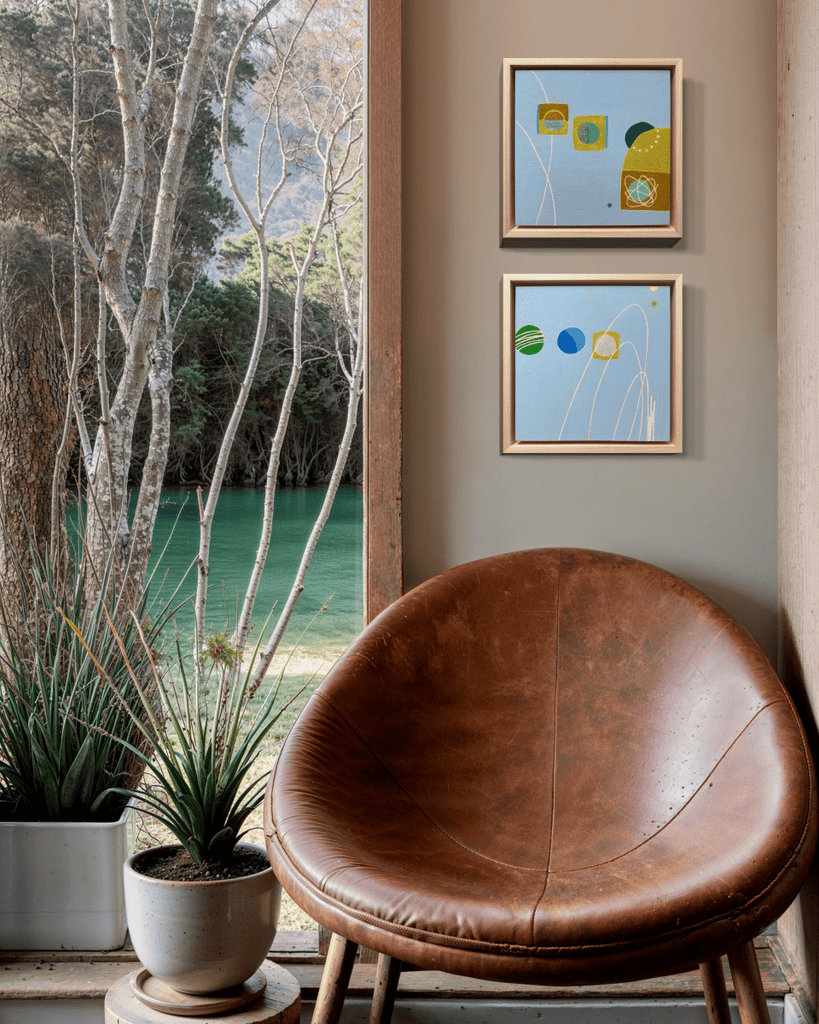
Coastal Calm by Kristen Guest
This technique works particularly well on shelves, sideboards, and built-in bookcases. The goal is not perfect symmetry but thoughtful balance. Combining different sizes, orientations, and frame styles creates a collected-over-time feeling that is often associated with beautifully designed homes.
Mixing More Than Art
Layering becomes even more interesting when artwork is combined with other decorative elements. Sculptural objects, books, ceramics, and natural materials can all contribute to the composition. These combinations add texture and create visual pauses that keep the arrangement from feeling flat.
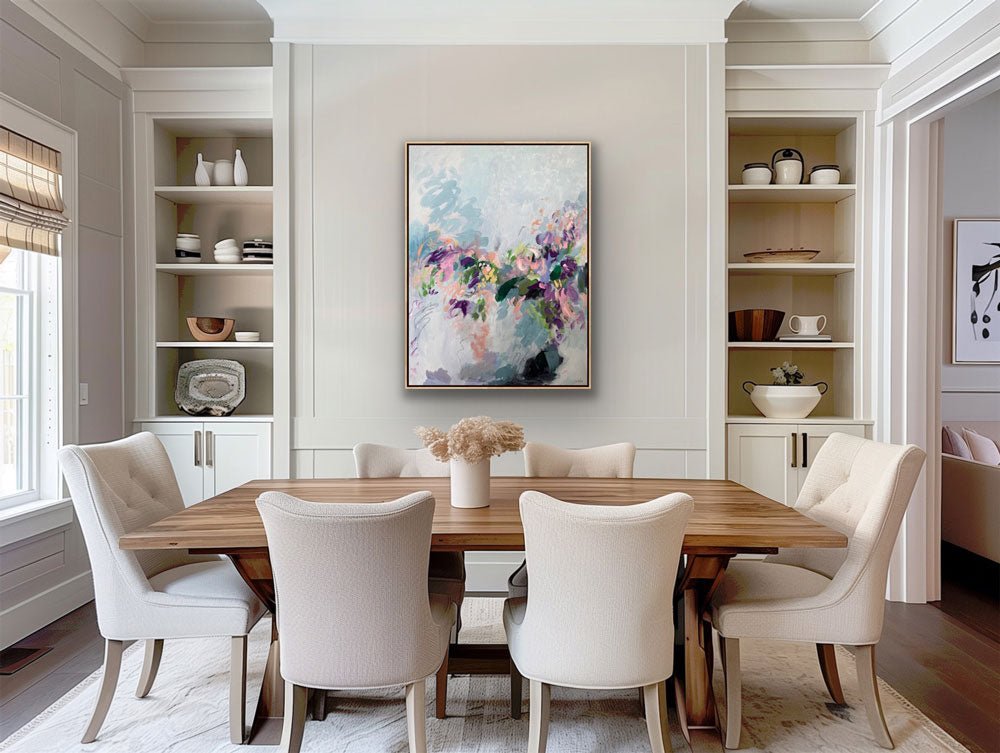
Whispered Grace by Christina Contaldi
A small painting placed behind a ceramic vase or a framed work leaning beside a stack of design books can transform an ordinary surface into a thoughtful vignette. These details help create spaces that feel curated without appearing overly styled.
Why We Love This Approach
Layering introduces something every well-designed home needs: personality. It moves away from perfection and embraces a more natural, collected aesthetic. It also allows artwork to become part of a larger story rather than existing in isolation.
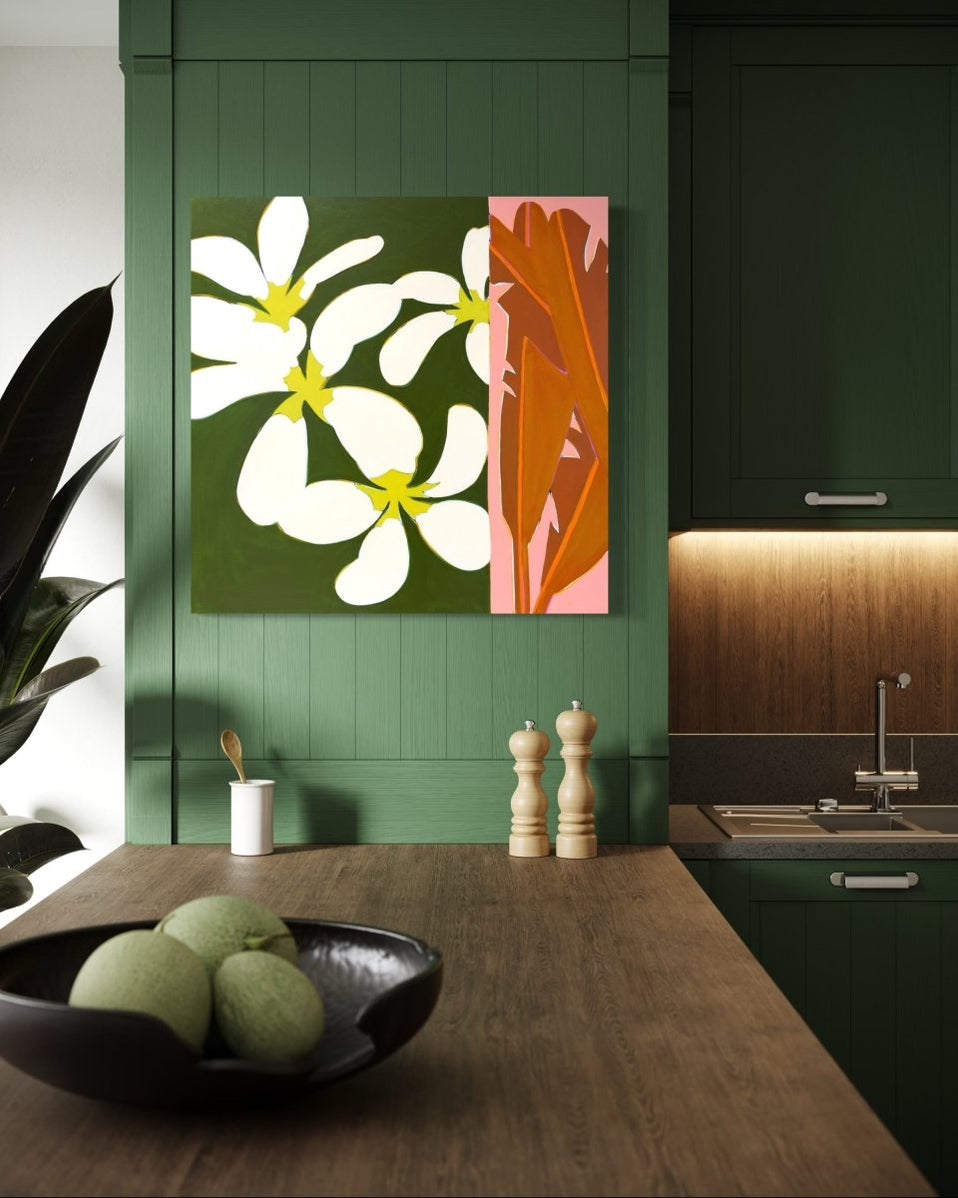
Island Plumeria by Kristen Guest
Perhaps most importantly, layering encourages experimentation. Pieces can be rearranged seasonally, mixed with new finds, or combined in unexpected ways. There is no single formula; only opportunities to discover what feels right in your space.
A Home That Evolves
The most memorable interiors rarely feel finished. They evolve through collecting, rearranging, and living with the things you love. Layering art embraces that philosophy, transforming walls, shelves, and surfaces into displays that feel personal and alive.
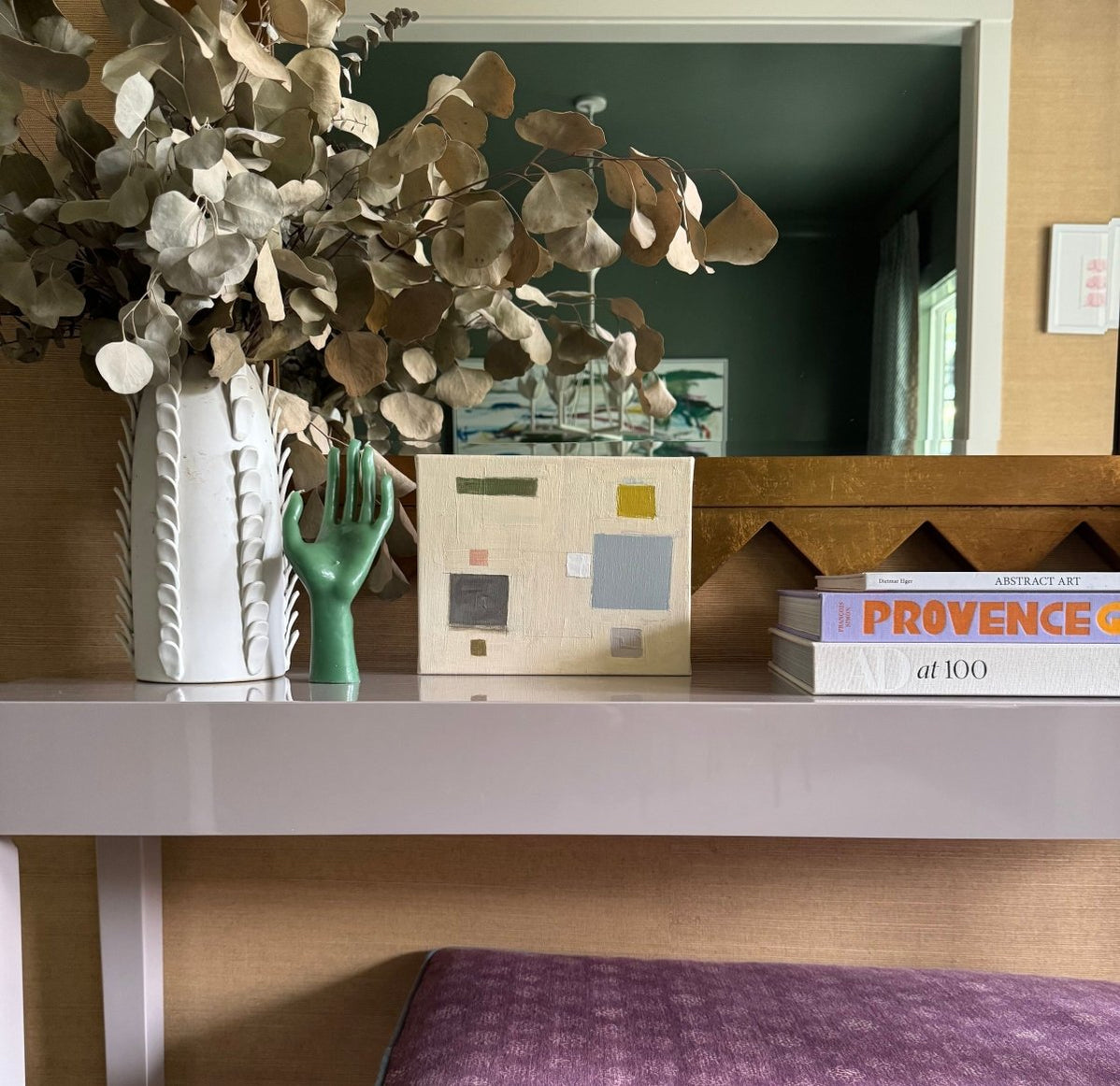
Whether you're leaning a favorite painting on a mantel, stacking smaller works on a bookshelf, or creating a layered arrangement that unfolds over time, these techniques invite a home to feel more expressive, more welcoming, and ultimately more reflective of the people who live there.
Leave a comment