
The Secret Alchemy Of Cyanotypes | Jann Edmondson


Cyanotype belongs to a rare category of artistic practices that feel both historical and quietly radical. Developed in 1842 by Sir John Herschel, the process emerged from scientific inquiry rather than aesthetic ambition. Its early adoption by botanist Anna Atkins (who used the technique to document plant specimens) cemented cyanotype as a medium rooted in observation, patience, and respect for natural form.
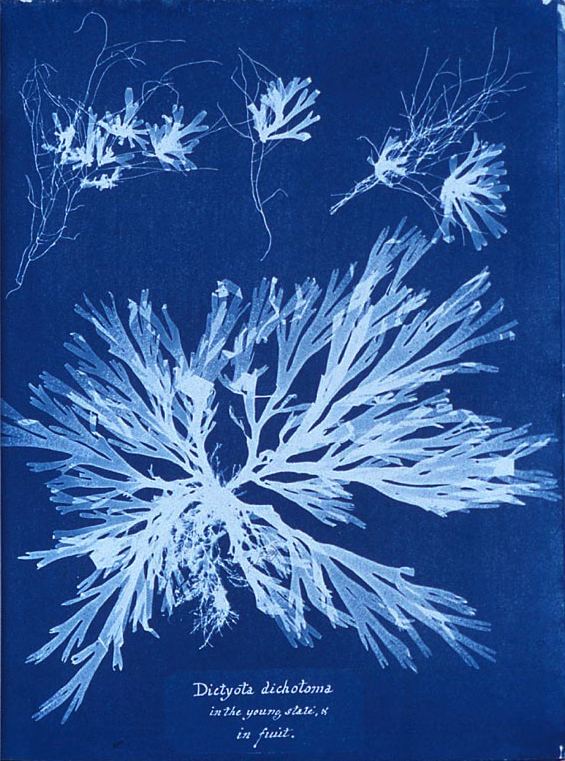
Cyanotype by botanist Anna Atkins
From its earliest expressions, cyanotype was never simply about image-making; it was about recording presence.
Defined by its distinctive blue, cyanotype relies on light-sensitive iron salts, water, and ultraviolet exposure. Yet the process resists standardization.

Light varies. Water behaves differently depending on mineral content. Organic materials shift with time and temperature. Control, while possible in part, is never absolute. This inherent unpredictability is not a flaw of the medium; it is its philosophy.
For Jann Edmondson, cyanotype entered her practice through a moment of recognition rather than intention.

Jann Edmondson art process
Nearly a decade ago, she encountered the work of Krista McCurdy, whose experimental “wet cyanotypes” challenged the medium’s traditional boundaries. The results were atmospheric and elusive, shaped as much by chemistry and weather as by the artist’s hand. It was enough to prompt Edmondson to begin experimenting herself.
Cyanotype occupies a precise and generative tension, between planning and surrender. Jann describes it as the point where nature, art, and science converge.

Cyanotypes drying at the studio.
While compositional decisions can be made, the final image is always a collaboration. Sunlight fluctuates. Temperatures shift. Fresh and dried botanicals behave differently. Even the water used in rinsing can alter the result. The process demands attentiveness, adaptability, and a willingness to let go.
That surrender reshaped Edmondson’s relationship to making art. Working with floral cyanotypes revealed how deeply the medium resists perfection. Attempts to control every variable often lead to frustration, while openness allows discovery.

Over time, she began to value process over outcome; a shift that brought clarity and quiet confidence to her practice. Creating became less about achieving a fixed result and more about remaining present within the act itself.
This emphasis on process has fueled continual evolution. Through years of experimentation, Edmondson has developed affinities for particular papers, plant forms, and toning methods. Occasionally, chance intervenes in unexpected ways.

Cyanotype in the making.
One summer, a cyanotype was inadvertently left outdoors for more than a week, exposed to intense heat and rain. When retrieved, its deep blue had transformed into a muted, sandy tone with faint traces of its original pigment. Such moments, Jann notes, serve as reminders that the medium is never exhausted; there is always more to learn.
Her current work expands cyanotype beyond its traditional boundaries. By integrating acrylic paint and gold ink, she creates object-based compositions: ginger jars, teacups, that blur the line between image and artifact.

Ferns and Flowers by Jann Edmondson
The result feels both intimate and archival, as though the work exists slightly outside of time.
The gathering of materials is equally intuitive. Sometimes Edmondson begins with a specific vision, but more often she walks without expectation. She is drawn to silhouettes, to the way light falls across leaves, to flowers just past their prime. Curling petals and irregular textures offer a complexity that perfect blooms cannot.

Back in the studio, the pace slows further. Arranging botanicals becomes a meditative practice; quiet, deliberate, and deeply tactile.
At its core, Jann's work is concerned with lived experience. As a collector herself, she understands that the significance of original art unfolds gradually. The initial moment of acquisition gives way to something subtler: a passing glance, a pause during a routine morning, a brief lift in mood when least expected.

These small, cumulative moments are what she hopes her work offers, an enduring presence rather than a single impression.
--
Cyanotype has always existed in dialogue with time, light, and chance. In Edmondson’s practice, it becomes a contemporary meditation on process, impermanence, and attention. The work does not demand to be read quickly. It asks to be lived with quietly, over time.
Leave a comment